
Beyond the Risk Assessment: Key HSE Takeaways
Page Published Date:
August 17, 2026

Moving past administrative controls: Five takeaways for safety professionals
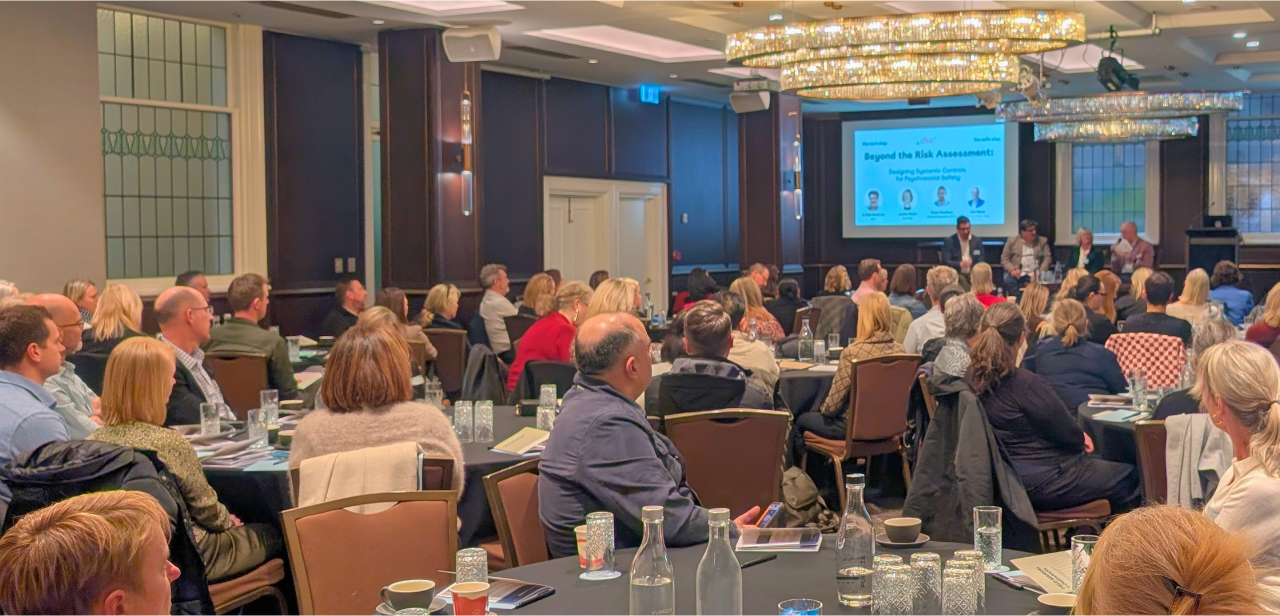
The Safe Step and The Next Step partnered with dss+ last night for Beyond the Risk Assessment, a panel discussion with around 100 HR and HSE leaders in Melbourne. The session, facilitated by Rod Maule (The Strategic Step Advisory), featured Dr Rod Gutierrez (dss+), Wade Needham (Natural Resources APAC) and Jackie Walsh (Bunnings).
For safety practitioners, here's what's worth taking back to your own risk framework.
1. Physical safety models don't transfer cleanly
Dr Rod Gutierrez made the point directly: a critical control works for physical risk because the hazard and the person's response to it are broadly standardised. Psychosocial risk doesn't behave that way. The same pressure lands differently depending on someone's history, biology and circumstances, which means an occupational exposure level approach simply doesn't translate.
2. Try safeguarding instead of tolerance
Rather than asking how much exposure is acceptable, Dr Rod suggested asking what protection needs to exist in the system for everyone.
That reframes the control question: identify the three or four things that cause the most serious harm (he named interpersonal conflict as the standout), and build controls specifically around those.
3. Get above the line
One attendee from the construction sector described adjusting the hierarchy of controls to focus above the line, on the work itself rather than the worker, and said that shift in language alone changed how their organisation approached controls. Another described the same idea as moving from reactive controls to upstream ones: supervision, standard work, and organisational design, rather than controls that only kick in after an incident.
4. Ownership sits across three functions, not one
Jackie Walsh's experience at Bunnings was echoed strongly in table discussions: when psychosocial risk owners were mapped, almost none of the risks sat purely within safety. Dr Rod described it as three wheels: operations as risk owner and implementer, HR designing many of the controls, and safety holding the assessment and evaluation process. If those wheels aren't connected, the framework looks fine on paper and does very little in practice.
5. Contractor and surge workforces need their own lens
Several tables raised contractor management as a genuine blind spot, from large-scale construction sites managing dozens of subcontractor companies through to seasonal surge workforces. One example involved managing sub-contractor pre-qualification for psychosocial systems, which several attendees agreed is still early days across the industry.
What this means for practice
Under Victoria's OHS (Psychological Health) Regulations, in force since 1 December 2025, WorkSafe has said it will factor in an organisation's track record on psychosocial risk management when deciding on enforcement. That makes the shift from administrative box-ticking to embedded, operational control genuinely material, not just good practice. Get in touch with our team about building controls that hold up under scrutiny.